
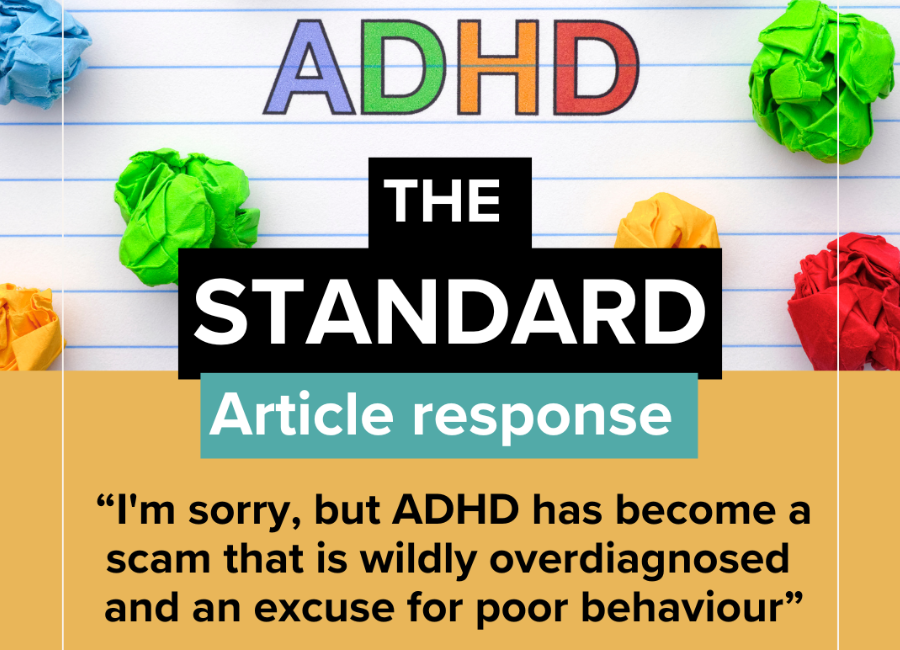
In her recent article, Melanie suggested that ADHD is a scam and is being widely overdiagnosed. As an assessment and diagnostic service, we understand from the clients we have worked with and through our own lived experiences how debilitating living with ADHD can be. We’d like to address a number of key points that this perspective overlooks:
Advances in research and understanding
The rise in ADHD diagnoses is largely due to better awareness, improved diagnostic criteria, and more accessible mental health care. ADHD has been widely recognised by neuroscientific and psychological research as a legitimate neurodevelopmental difference, with measurable variations in brain function—particularly in executive functioning, impulse control, and attention regulation. This is not about medicalising normal behaviour, but understanding how neurodivergent brains process and respond differently to the world.
Historical underdiagnosis
Rather than overdiagnosis, ADHD has long been underdiagnosed—especially in certain populations, such as girls, adults, and individuals from minority or lower-income backgrounds. Many adults today are only receiving diagnoses because ADHD was previously poorly understood or thought to be a condition that only affected hyperactive young boys. The increased awareness of ADHD is a reflection of progress, not an expansion of unnecessary medicalisation.
Impact on daily life
ADHD is not merely “normal” distractibility or energy levels. The condition significantly impairs academic, professional, and social functioning. It affects time management, working memory, impulse control, and emotional regulation challenges that extend beyond what is typical for someone without the condition.
Role of modern society
While critics argue that increasing ADHD diagnoses reflect societal intolerance for natural variations in behaviour, the reality is that modern environments, such as structured school systems and high-demand workplaces, exacerbate the struggles of those with ADHD. However, rather than creating ADHD, these structures simply highlight the difficulties individuals with the condition naturally face.
Benefit of diagnosis and treatment
Dismissing ADHD as an over-medicalisation of normal behaviour undermines the lived experiences of those who struggle with it. Proper diagnosis and support can significantly improve quality of life, helping individuals unlock their potential rather than be held back by untreated symptoms.
Biological and genetic evidence
ADHD has strong genetic links and is associated with distinct neurological differences. It is not a social construct or a matter of labelling normal behaviour, but a condition with biological underpinnings, confirmed by studies on brain activity and dopamine regulation.
Unique experiences of ADHD
Everyone’s experience with ADHD is unique, even within the same presentation types (e.g., inattentive, hyperactive). What works for one person may not work for another, which is why personalised support and a tailored approach are crucial for those navigating ADHD.
By framing ADHD diagnoses as a mere trend of “medicalising normal behaviour,” critics risk invalidating real struggles and deterring people from seeking the support they need. The increase in diagnosis is more reflective of progress in mental health recognition and understanding than an unnecessary expansion of medical categories.
Here at Autism & ADHD Assessment Hub, we are committed to offering robust, NICE-compliant assessments to reach a reliable clinical opinion and diagnosis, where appropriate. We are dedicated to challenging stigma and breaking down barriers for neurodivergent people – including those with ADHD, so they can receive the help, support, and acceptance they need.
If you or someone you know is struggling with ADHD, reaching out for support could make a world of difference in unlocking the potential and well-being of those affected.
Article link: https://www.standard.co.uk/comment/adhd-london-diagnosis-pip-social-media-b1216208.html